Bathrooms and laundry areas
Recurring humidity and limited ventilation can feed growth around drywall, vanity backs, and trim. We focus on containment, cleaning, and identifying the moisture driver (fan performance, leaks, or poor drainage).
Serving Durham, North Carolina & surrounding areas
24/7 Emergency Response
Mold removal · Durham, NC
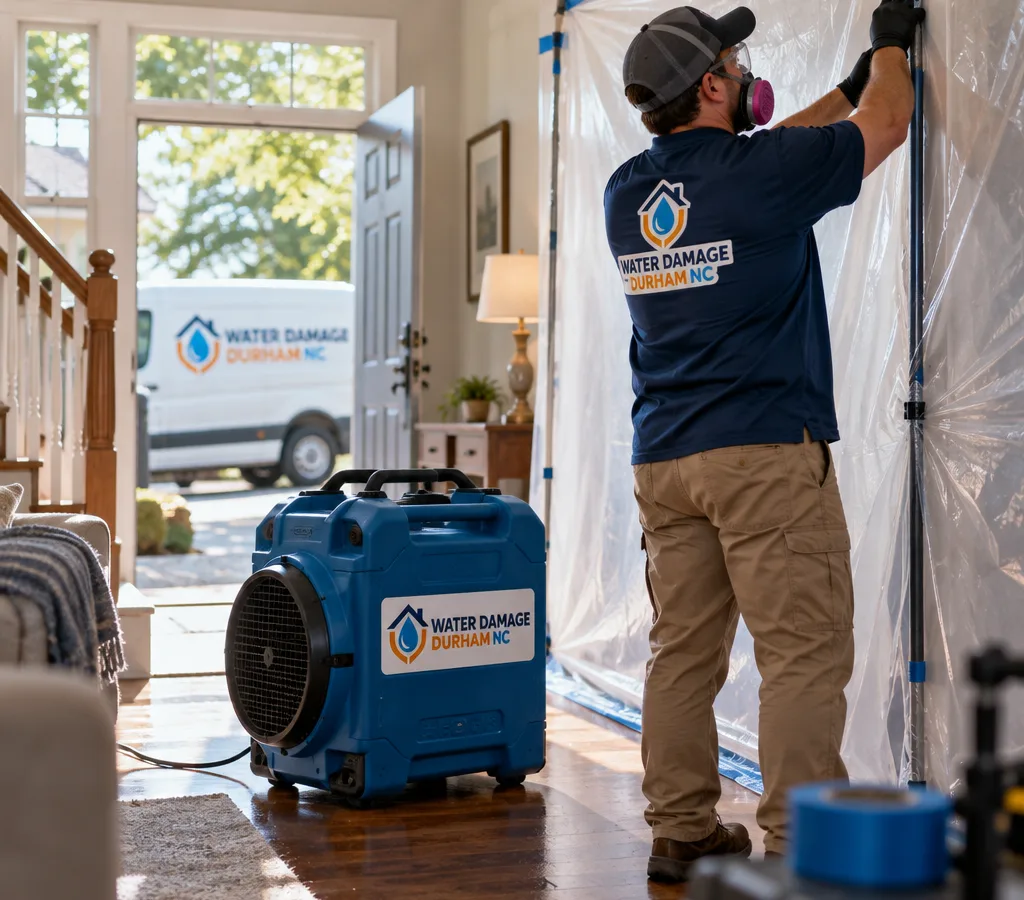
If you smell mustiness, see staining, or have had a leak, we contain the area, remove contaminated materials, clean and treat surfaces, and document the work so you can move forward with confidence.
Contain the area before disturbing it
When you are searching for mold removal Durham NC, you usually want two things fast: a real answer about what is affected, and a plan that keeps the problem from spreading while it is being fixed. Mold is less about the color you see and more about moisture, porous materials, and air movement. Disturbing growth without containment can push spores into adjacent rooms, attics, or HVAC returns.
Our team at Water Damage Durham NC handles mold remediation in Durham for homes and small commercial spaces. We start with the practical questions that matter: What caused the moisture? How far has it traveled behind drywall or under flooring? What materials can be cleaned, and what needs to be removed? We work methodically, with controlled demolition where needed, HEPA filtration, and moisture control so the area can dry back to safe levels.
After a roof leak, plumbing failure, or a slow drip that went unnoticed until odor or discoloration appeared, water damage specialists serving Durham, NC are often brought in to assess what’s happening and address moisture conditions that can lead to mold. If you are dealing with a recent leak and suspect mold may be involved, the right move is to stop the moisture source, keep the area closed off as much as possible, and get an inspection that turns uncertainty into a written scope.
A controlled remediation process
A good remediation is a controlled process, not a quick wipe-down. The goal is to remove contamination and correct the conditions that allowed growth.
Common steps in mold remediation Durham NC projects
In Durham, we often see mold problems tied to slow plumbing leaks under sinks, condensation around HVAC components, and moisture intrusion after heavy rain. Homes with crawlspaces can also be vulnerable when humidity stays high and ventilation or vapor barriers are not doing their job.
Room-by-room moisture risks
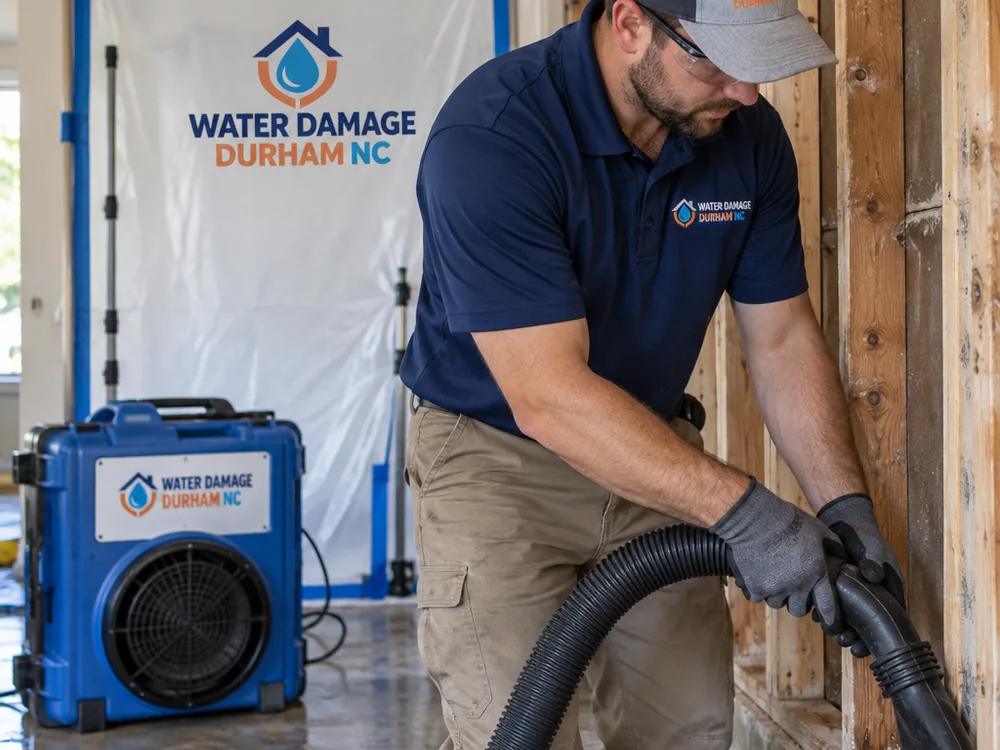
Recurring humidity and limited ventilation can feed growth around drywall, vanity backs, and trim. We focus on containment, cleaning, and identifying the moisture driver (fan performance, leaks, or poor drainage).
Slow supply-line drips and drain leaks often soak particleboard and drywall without obvious puddling. We check for hidden wet materials and remove what cannot be reliably cleaned.
Moisture can build up under the home and affect subfloors and framing. Remediation may include cleaning affected framing and improving drying conditions so the issue does not return.
Wet insulation and sheathing can develop growth quickly when airflow is limited. We remove compromised insulation, clean affected wood surfaces, and verify drying before closing things back up.
If carpet, pad, or baseboards stayed wet, contamination can develop behind walls or under flooring. We use controlled removal and HEPA cleanup to keep the rest of the home protected.
From inspection through handoff
Step 1 of 5
We look at the visible area, then check likely pathways behind surfaces and around plumbing or exterior walls. The goal is to define the affected footprint and the moisture source driving it.
Step 2 of 5
Before we disturb materials, we isolate the work zone and set up HEPA filtration. This reduces cross-contamination into hallways, adjacent rooms, and HVAC pathways.
Step 3 of 5
We remove contaminated porous materials carefully and bag debris for disposal. Where possible, we keep demolition limited to what is necessary to access and remove affected areas.
Step 4 of 5
We HEPA vacuum, wipe, and treat surfaces per the scope. Framing, subfloors, and other structural components are cleaned with attention to edges, fasteners, and joints where growth can hold.
Step 5 of 5
We confirm drying progress with moisture readings where applicable and provide a clear summary of what was done. If repairs are needed after remediation, you have a clean, documented starting point.
Planning the remediation scope
Mold removal in Durham typically ranges from about $800 to $3,500 for many residential situations, with small, contained areas sometimes closer to $500 to $1,200 and larger or multi-room remediation reaching $4,000 to $10,000+ when demolition, drying, or complex containment is required.
Your final price depends on the size of the affected area, how much porous material must be removed, access (crawlspace or tight attic work), whether negative air containment is needed, and how much moisture control or drying is involved. The most accurate number comes after an on-site inspection and a written scope.
Customer experiences
We had a musty smell that kept coming back after a small leak. They set up containment, explained what had to be removed, and the house finally stopped smelling damp. The documentation was clear and helped us plan the rebuild.
The team treated it like a safety job, not a quick spray-and-go. They kept dust and debris under control and showed us the moisture readings before they wrapped up.
Straight answers
Start times depend on current demand, but mold work is usually prioritized because containment matters. After you reach out, we focus on getting eyes on the problem quickly so you have a scope, an outline of containment steps, and a realistic timeline for removal and drying.
Often, yes, if the work area can be properly contained and isolated, but it depends on where the mold is and who lives in the home. If the affected area is near main living spaces or the HVAC return, or if someone has respiratory sensitivity, we may recommend staying out of the work zone or temporarily relocating.
Testing is not required for every job, but it can be useful when the affected area is unclear or when you want third-party confirmation after remediation. Many Durham clients choose to start with an inspection and scope first, then decide whether sampling adds value for their situation.
Mold removal usually refers to taking out the contaminated materials you can see, while mold remediation covers the full control process: containment, air filtration, removal, cleaning, and correcting moisture conditions so the problem is less likely to return. A proper Durham mold removal plan should include both removal and the moisture fix.
Bleach can lighten staining, but it is not a reliable fix on porous materials like drywall, insulation, or unfinished wood because it does not penetrate deeply and the moisture can feed regrowth. For porous, contaminated materials, controlled removal is often the correct approach, followed by HEPA cleaning and appropriate antimicrobial treatment on remaining structural surfaces.
Yes. When mold follows a leak, the priority is stopping the source and drying the structure, then remediating any contamination. If you are still dealing with active moisture, our water damage restoration team can coordinate drying and moisture control so the remediation is built on stable, dry conditions.
Turn uncertainty into a written scope
Tell us what you are seeing (odor, staining, a recent leak, or visible growth) and where it is happening. We will schedule an inspection, explain what needs to be contained and removed, and provide a written scope you can act on.