Flood Cleanup
Cleanup and dry-down after storm water, surface water, or ground-level flooding. Includes debris removal, affected material evaluation, and a documented plan to get the structure stable again.
Serving Durham, North Carolina & surrounding areas
24/7 Emergency Response
Durham water damage restoration
Fast response for leaks, burst pipes, and storm water. We dry the structure, document what happened, and coordinate next steps so you can move forward with less disruption.
If you are searching for water damage Durham NC help, you probably need two things right away: to stop the damage from spreading, and to understand what comes next.
Water Damage Durham NC provides water damage restoration in Durham for homes and small commercial spaces. We focus on practical, verifiable work: controlled drying, moisture checks that guide decisions, and clear documentation you can use for property management or insurance.
Every water loss is different. A supply line leak behind a vanity, a washer overflow, or rain intrusion through a roof or window can all look similar at first. The difference is where the water traveled and what materials stayed wet. Our job is to find that path, remove what cannot be saved, and dry what can.
Expect straightforward communication, a written scope, and a plan built around drying science, not guesswork. If repairs are needed after drying, we help coordinate next steps so you are not juggling vendors while your property is still vulnerable.
Specialized cleanup support
Cleanup and dry-down after storm water, surface water, or ground-level flooding. Includes debris removal, affected material evaluation, and a documented plan to get the structure stable again.
Rapid removal of standing water with commercial pumps and extractors, followed by targeted drying setup. Often the first step when carpets, pad, or low areas are saturated.
Sanitation-focused cleanup for contaminated water, with safe removal of affected materials and disinfecting steps appropriate for the category of loss. Built for health and documentation needs.
Built around the loss
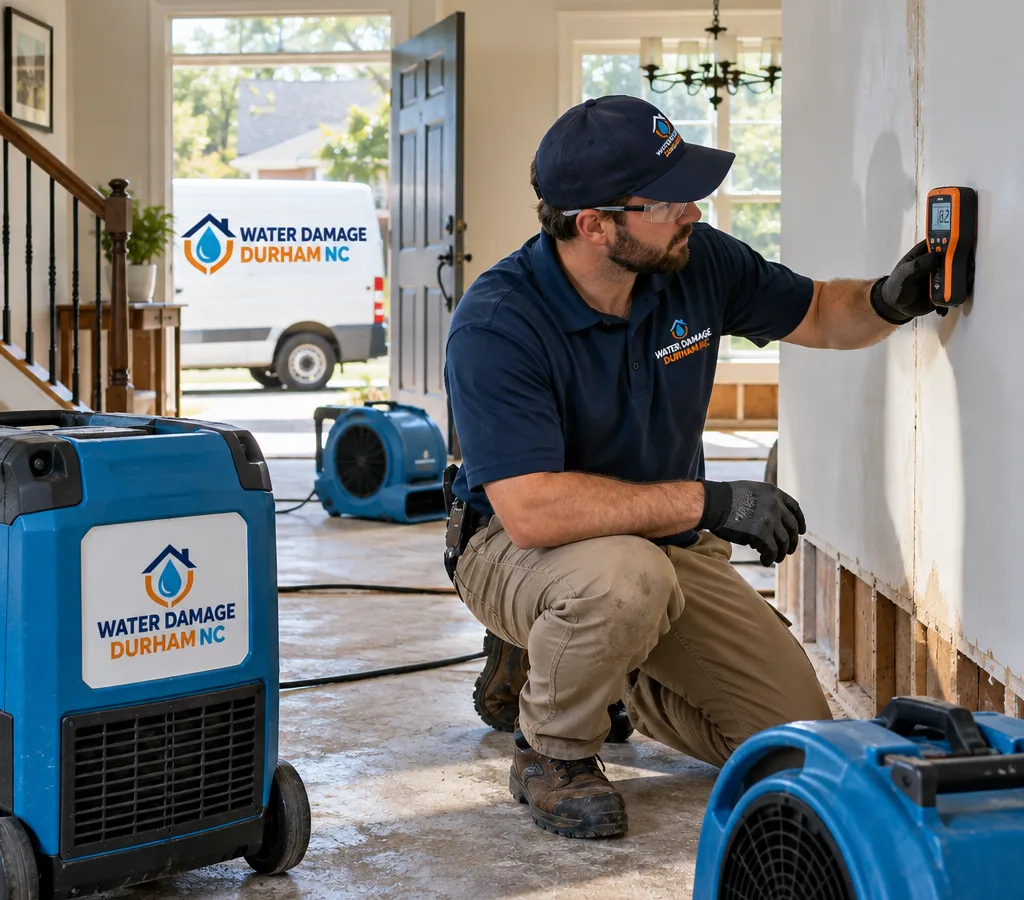
We trace where water traveled using moisture meters and site checks, then set a drying plan that matches the materials affected. That helps prevent missed wet areas that can lead to odors, swelling, and future repairs.
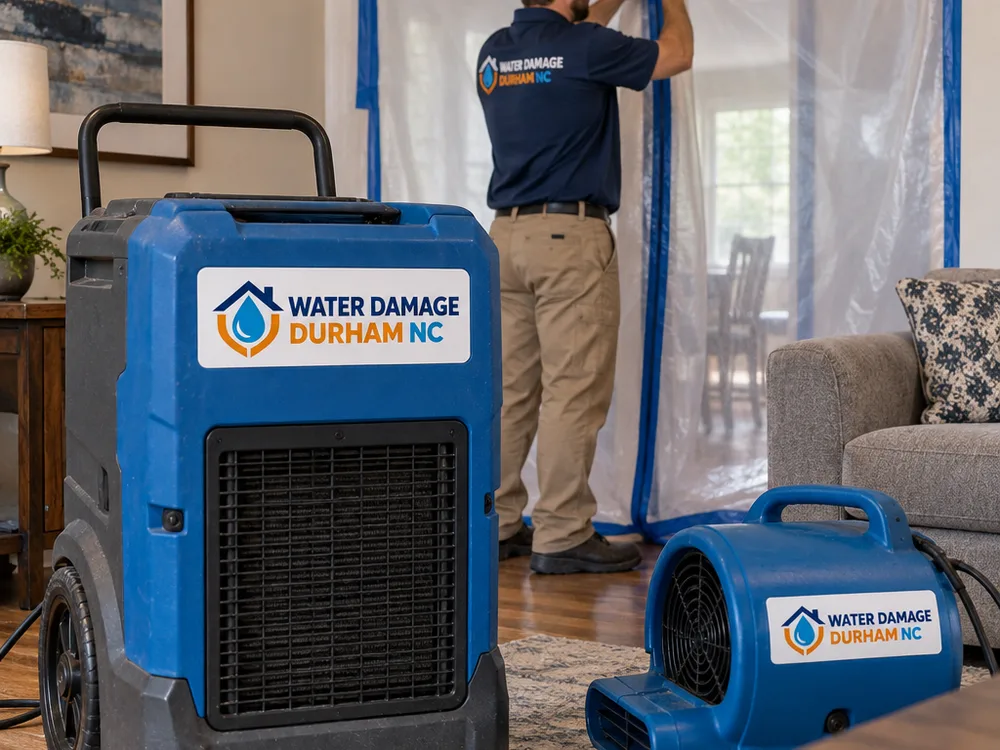
When wet drywall, insulation, or flooring must be removed, we can isolate the work area to reduce dust movement through the home. This is especially helpful for occupied spaces and homes with nearby HVAC returns.
Air movers, dehumidifiers, and targeted airflow are placed based on the loss, not just square footage. We adjust the setup as materials dry so drying stays efficient and the structure is protected during the process.
We document affected areas, visible damage, and drying progress in plain language. That gives you a clean record for an insurance claim, a landlord file, or internal business reporting.
After drying and demo, many projects need rebuild steps like drywall, trim, or flooring. We help outline what is next, what can start immediately, and what should wait until moisture readings confirm it is ready.
Water Damage Durham NC provides water damage restoration for homes and businesses in Durham, North Carolina.

Local restoration support
Our role is to stabilize the property after a water loss and help you make good decisions under pressure. That starts with a careful inspection of the source, the affected materials, and the areas water may have migrated into. We then build a drying plan, set equipment, and track progress with moisture checks.
You will get a clear scope of work and documentation that matches how water damage restoration is actually evaluated: what is wet, what was removed, what is drying, and what conditions were present. If the situation involves multiple rooms, finished basements, or hidden cavities, we talk through options so you can balance speed, cost, and how invasive the work needs to be.
Our office is based on N Mangum St, Durham, NC 27701, and we serve the city with a focus on rapid response and straightforward communication.
Planning the work
Water damage restoration in Durham typically ranges from about $900 to $6,500, depending on how much of the structure got wet and what needs removal. A small, contained leak with basic drying is often $900 to $2,000, while multi-room losses with drywall or flooring removal commonly run $2,500 to $6,500+.
Final cost depends on water category, how long materials stayed wet, how many rooms and cavities are affected, equipment needs, and the amount of demolition and cleaning required. The exact price is confirmed after an on-site inspection and moisture mapping.
From inspection to repair handoff
Step 1 of 4
We start by identifying the water source (active leak, overflow, rain intrusion) and inspecting adjacent rooms, lower levels, and wall cavities. Moisture readings help define the real boundary of the loss.
Step 2 of 4
Standing water is extracted when present. We remove materials that cannot dry safely or are already compromised, such as swollen baseboards, saturated pad, or collapsed drywall, based on conditions and your goals.
Step 3 of 4
We set air movement and dehumidification for the affected materials, then monitor progress with follow-up checks. Documentation includes what was wet, what was removed, and when areas return to acceptable moisture levels.
Step 4 of 4
Once the structure is dry and stable, we outline what repairs are next and what can start right away. If you are working with insurance or property management, we provide the info needed for approvals and scheduling.
If you have wet drywall, bubbling paint, warped floors, or a musty smell after a leak, get an inspection and a written scope before damage spreads further.
Call for Emergency HelpAcross the city
Durham has a mix of older homes, newer builds, and multifamily properties, and water damage shows up differently in each. We work across the city, including:
Condos, apartments, and renovated buildings can hide water travel behind finished walls and shared chases, so careful moisture mapping and documentation matters for unit and building coordination.
Many older homes have plaster, older wood trim, and crawlspaces where leaks can spread before they are obvious. Drying plans often need attention to wall cavities and subfloor moisture.
Renovated properties and additions sometimes have mixed materials and transitions that trap moisture. We check junction points like new to old framing, window openings, and floor transitions.
Larger homes with multiple baths and long plumbing runs can turn a small supply line issue into multi-room impact. We focus on tracing the migration path and protecting finished floors.
Newer homes and townhomes often have engineered flooring and tight wall assemblies that show damage quickly. Prompt drying and targeted removal can help limit how far repairs need to go.
Customer experiences
A pipe leaked in the wall and we did not realize how far the water went. The team explained what they found, set up drying equipment, and kept us updated with photos and notes we could share with insurance.
They were direct about what needed to come out and what could be dried in place. The documentation made the next steps with repairs much easier.
After a ceiling leak, they checked the rooms below and caught moisture we would have missed. The process was organized and the house was left clean after the removal work.
Straight answers
Response depends on current job load, but we prioritize active leaks and situations with standing water. If the water is still running, shut off the supply if safe and move valuables away from the wet area while you wait.
Yes, we can provide the photos, moisture readings, and written scope that insurers and adjusters commonly request. You stay in control of the claim, and we focus on documenting conditions clearly and consistently.
Stop the source if you can do so safely, then limit spread by moving items off wet flooring and blotting or extracting what is accessible. Avoid running HVAC if it is pulling humid air through the affected area.
Some drywall can be dried in place depending on how saturated it is, how long it stayed wet, and whether there is insulation behind it. We confirm with moisture readings and the condition of materials, then recommend the least invasive safe option.
Yes, hidden moisture checks are a core part of our inspection. We look at edges of rooms, transitions, baseboards, and any area where water could have migrated, then document what we find so the drying plan matches the loss.
Yes, we work on offices, retail spaces, and other small commercial properties. We can plan drying and removal to reduce disruption, and provide documentation that supports property management and tenant communication.
Restore control of the property
Tell us what happened and where the water is showing up. We will schedule an on-site inspection, map the affected areas, and provide a clear plan for drying and repair coordination.