Main line clogs and blockages
Grease, wipes, and buildup can restrict the line until wastewater backs up into the lowest drains. Cleanup focuses on sanitation, while the plumbing issue needs to be addressed so it does not repeat.
Serving Durham, North Carolina & surrounding areas
24/7 Emergency Response
Sewage cleanup · Durham, NC
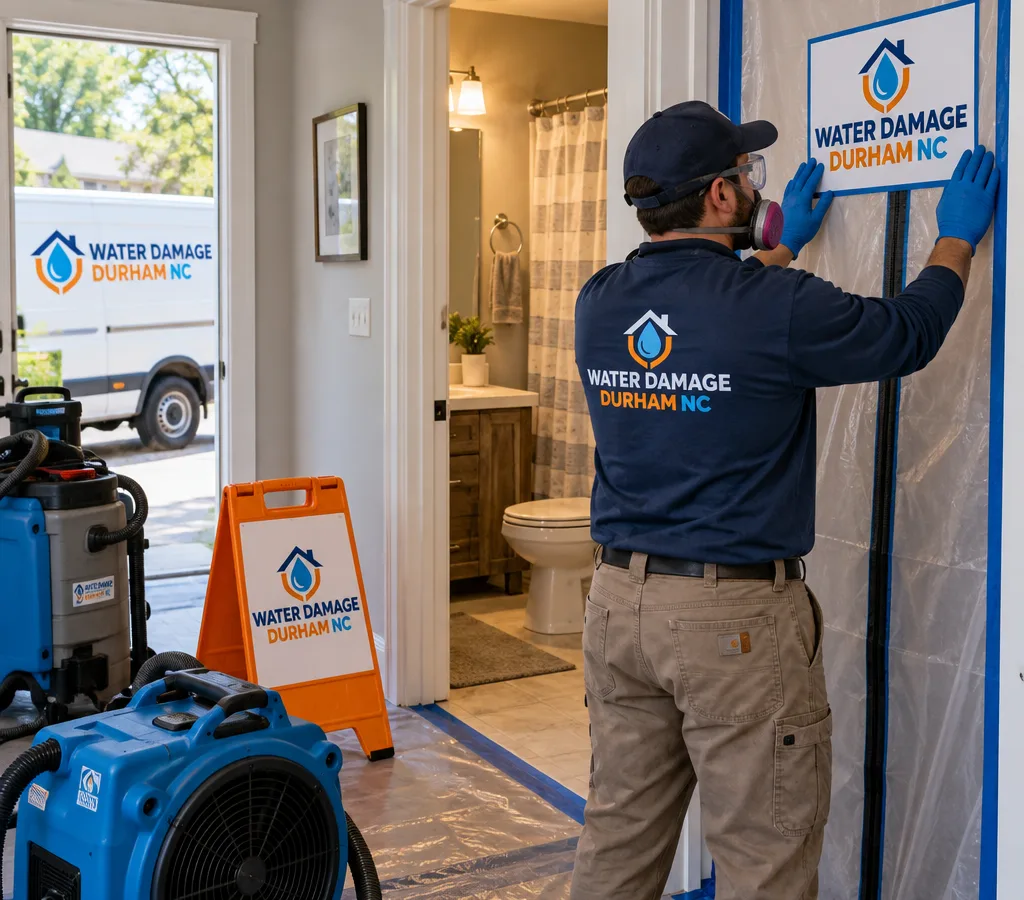
Fast containment, safe removal, and thorough sanitation after a sewer backup so your home or business can be used again with confidence.
Contain contamination quickly
Sewage is more than a bad smell. It can carry bacteria, viruses, and parasites, soak into porous materials, and spread contamination through HVAC returns and foot traffic. If you are dealing with sewage cleanup Durham property owners typically need, the priority is to stop the spread, remove contaminated water and debris, and disinfect every surface that was touched.
Water Damage Durham NC handles sewage cleanup for homes, apartments, and commercial spaces across Durham. Our team arrives prepared to isolate the affected area, document what happened, and build a clear plan that balances safety, speed, and what can realistically be saved.
Because sewer backups often involve hidden contamination, we treat these jobs as a controlled remediation. We establish a clean-to-dirty workflow, use professional extraction and drying equipment, and apply disinfectants according to label directions and dwell times. In the middle of the work, Durham's trusted water damage team focuses on one thing: returning the space to a sanitary condition you can live and work in.
Controlled removal and sanitation
Every loss is different, but professional sewage cleanup usually follows the same essentials:
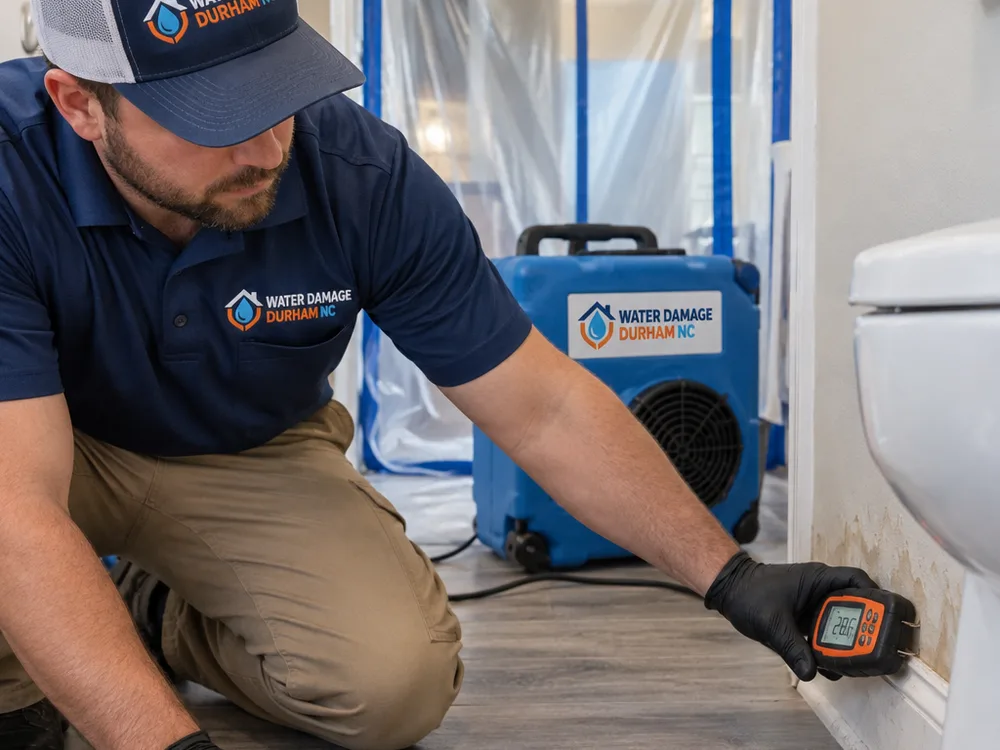
If the backup affected a crawl space, a finished basement, or multiple rooms, we map the impacted areas with moisture readings so the scope matches what actually happened, not just what is visible.
Find and correct the source
Grease, wipes, and buildup can restrict the line until wastewater backs up into the lowest drains. Cleanup focuses on sanitation, while the plumbing issue needs to be addressed so it does not repeat.
Roots can enter older sewer lines through joints or cracks and create recurring blockages. After cleanup, you may need a plumber to evaluate the line with a camera.
When a sewage ejector or pump system fails, contamination can spread quickly. We prioritize containment, then removal and disinfection of all impacted surfaces.
During periods of heavy rain, some systems can become overwhelmed. Even small backups can contaminate flooring seams, grout lines, and wall cavities.
Toilet overflows or bathtub backups can look localized but still push contamination into adjacent rooms. We check neighboring materials before closing out the job.
From containment to verification
Step 1 of 6
We identify entry points, limit access, and set up containment. If needed, we coordinate with your plumber or property manager to stop the source and prevent further discharge.
Step 2 of 6
We assess what is visibly impacted and what is likely affected behind walls or under floors. You get a clear plan for removal, cleaning, drying, and any rebuild preparation required.
Step 3 of 6
Standing sewage and solids are removed first. Materials that cannot be reliably cleaned, including saturated pad or heavily contaminated insulation, are removed for proper disposal.
Step 4 of 6
We clean surfaces to remove organic load, then disinfect using appropriate products and contact times. Trapped odor is addressed with methods matched to the construction and room use.
Step 5 of 6
Drying is not optional. We set equipment based on moisture readings and verify progress until the structure returns to normal moisture conditions for the season and indoor environment.
Step 6 of 6
We review what was cleaned, what was removed, and what is ready for repair. If reconstruction is needed, we leave the space prepared for the next trade to work safely.
Local property conditions
Sewer issues in Durham often show up in the lowest areas of a property: first-floor bathrooms, laundry rooms, and any finished or partially finished lower level. In neighborhoods with older housing stock, aging drain lines and older fixture connections can increase the chance that a backup spreads beyond a single room. In newer multi-family buildings, a backup in one unit can affect neighboring units through shared stacks and floor penetrations, which makes fast containment important.
Access also changes the plan. Tight bathrooms, stacked washer and dryer closets, and occupied commercial spaces require careful staging, clean entry paths, and clear separation between clean and contaminated zones. If your property is near downtown Durham and parking or loading is limited, we plan equipment placement so we can keep traffic paths safe and reduce tracking.
If you are still dealing with standing water along with the sewage, you may also need broader drying and moisture control. In that situation, a coordinated approach matters so sanitation happens first and drying happens without spreading contamination.
Planning the scope
Sewage cleanup in Durham typically ranges from about $1,500 to $7,500+, with small, contained toilet overflows often on the lower end and multi-room backups with demolition, drying, and heavy disinfection on the high end. Crawl spaces and saturated flooring systems can also push costs higher.
Final price depends on how far contamination spread, what materials are affected, access and disposal needs, and whether drying equipment must run for multiple days. The exact cost is confirmed after an on-site inspection and written scope.
Customer experiences
“We had a backup that reached the hallway carpet. The crew sealed the area, removed what couldn't be saved, and the smell was gone after the disinfecting and drying. The explanations were clear the whole time.”
“They treated it like a health issue, not just a mess. The containment and cleanup steps made sense, and we felt comfortable using the bathroom again after the final walkthrough.”
Straight answers
Yes. Sewage is treated as Category 3 water, which means it can contain harmful pathogens and requires controlled cleanup with PPE, containment, and disinfection. DIY cleanup can spread contamination into adjacent rooms, HVAC returns, and soft goods, so professional handling is the safer choice when sewage contacts floors, walls, or contents.
Cleanup should start as soon as it is safe to enter and the source is stopped, because contamination can soak into porous materials and odors can set in quickly. Even if the water recedes, residue remains and needs physical cleaning plus disinfection to restore sanitary conditions.
Usually, padding that has contacted sewage needs to be removed, and carpet is often removed as well because it is difficult to fully clean and disinfect through the full thickness. If only a small area is affected and contamination is clearly limited, we can evaluate salvageability, but removal is recommended when sanitation cannot be verified.
Not always, but it is common when sewage reaches baseboards or wicks upward into drywall. We assess how high moisture and contamination traveled and may remove a controlled strip to access wall cavities for cleaning and drying, especially around bathrooms, laundry areas, and shared plumbing walls.
Keep people and pets out of the affected area, avoid running water or flushing, and do not use fans that could blow contaminants into clean rooms. If you can do so safely, turn off power to affected outlets and move uncontaminated valuables away without stepping through sewage.
In most cases, yes, once contaminated materials are removed and all impacted surfaces are properly cleaned, disinfected, and dried. Persistent odor usually means residue remains in porous materials, under flooring, or inside wall cavities, which is why inspection and moisture verification are part of professional cleanup.
Yes. We can coordinate access, containment, and work hours for apartments, offices, and retail spaces, and we keep traffic paths separated from contaminated zones. For multi-unit buildings, we also help identify where the impact stops so cleanup is limited to what was actually affected.
Restore safe, sanitary conditions
Tell us what happened and where the backup occurred. We will assess the impact, explain what needs to be removed versus cleaned, and provide a written plan to restore safe, sanitary conditions.